

Starting Again at 59 — and Why That’s the Most Honest Thing I’ve Ever Done
08 June 2026 Comments off
Reading time:
5 minutes
Word count:
1035
Peter Pilgrim · Sunday 8 June 2026 · xenonique.co.uk/blog
I turned 59 this year.
I don’t say that for sympathy. I say it because it changes how I want to write this post — and how I want to show up for the people who read it.
There is something clarifying about this age. The noise falls away. The performance falls away. What you are left with is a question that is surprisingly simple and surprisingly difficult: what do I actually have to offer?

I started writing software professionally in 1991. Not in London, where I had graduated the year before — the recession had closed that door. I went to Weinheim, Germany instead, to a small company doing spectroscopic applications, writing Fortran 77 and then C. I was 24 years old, in a foreign country, figuring it out as I went. The company paid for me to learn German for 3 months in morning sessions. It was hard for me as an adult, I never thought that needed the French that I tried to learn in secondary school, so imagine the surprise, now I volunteered to learn German, but I did, eventually.
That, I now realise, was my first lesson in technical leadership — though I would not have called it that then. It was a lesson in adaptation. In showing up somewhere unfamiliar and finding a way to be useful.
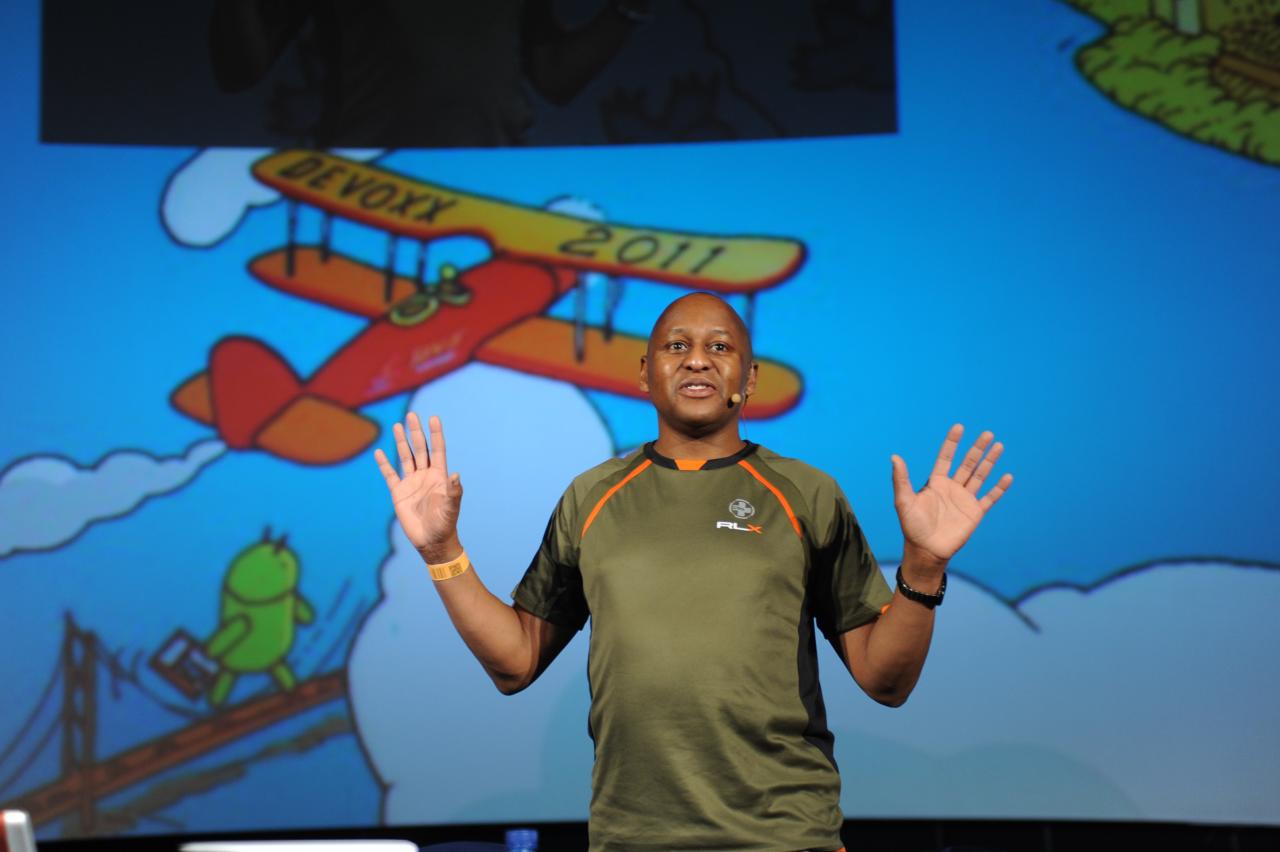
I have been adapting ever since. I discovered Java in 1998 and never looked back. I became a Java Champion. I led engineering teams across some of the most complex digital programmes in the UK government — HMCTS, the Home Office, HM Passport Office. I was there in the early days of the Payments Hub at Santander (Milton Keynes, 2017). I also helped build the Java service-side to the award-winning Spanish Honda website (Honda.es / LBi) delving into digital agency work (2013). Before those achievements, I spent a considerable amount of time in financial heart of London, investment banking with Java: Deutsche Bank, Credit Suisse, UBS, Lloyds Bank and RBS. I spoke at QCon London, at JavaOne, at Devoxx Belgium. I wrote two books. I mentored engineers, coached teams, and had more conversations about dependency injection, design patterns and the nature of good software than I can count.
Thirty-five years. That is how long I have been doing this.
But here is the thing I have learned — the thing that matters most, and that I could not have articulated at 24 or 34 or even 44:
It is not the technology.
It was never really the technology.
It is the communication. The conversation. The shared journey toward an objective that a group of human beings have agreed to pursue together, in exchange for an income, in a building or a video call or a Slack channel, with all the complexity and contradiction that human beings bring to any shared endeavour.
The technology is the medium. The people are the work.
When I became a Java Champion, I was recognised for my contribution to the Java community. I am proud of that. But what I am most proud of — what I think I am actually good at — is helping engineers become better at working with other people. Helping them understand that the promotion to technical lead is not a technical promotion. It is a human one.
Tomorrow morning, at 10am, I am running my first public masterclass.
It is called Technical Lead: The Unwritten Rules — and the title is precise. It covers the things that do not appear in job descriptions. The politics. The people. The stand-up that has been running 45 minutes because a delivery manager took it over. The incumbent who has been there since before you arrived. The moment you realise that being the best engineer in the room is the least useful thing about you.
I have wanted to teach this material for years. I kept waiting until I felt ready. Until I had the platform, the proof, the permission.
I stopped waiting.
Technical Lead: The Unwritten Rules — 10am BST Weds 17th June 2026 — £99 + VAT — standard price £150 + VAT — Book your place
Not because I have all the answers. I have 35 years of experience and I am still learning, still growing, still occasionally surprised by what I did not know. But I have enough — earned the hard way — and I would rather share it imperfectly than hoard it perfectly.
I want to say something directly to the senior developer reading this who is about to step into a technical lead role for the first time.
You have not got it wrong.
You are navigating something genuinely difficult. The transition from engineer to leader is one of the least well-supported career transitions in our industry. The skills that made you exceptional as a developer are not the same skills that make you effective as a lead. Nobody tells you that clearly. Nobody gives you the map.
This masterclass is the map I wish I had been given.
I am 59 years old and I am starting something new. A new chapter. A new offering. A new way of contributing the knowledge I have spent a career accumulating.
That is not a crisis. It is an adventure — deliberate, honest, and long overdue.
I know what I know. I know what I do not know. And I have stopped pretending the distance between them is smaller than it is.
If you would like to spend three hours with someone who will tell you the truth about technical leadership — the good parts, the hard parts, and the parts that will make you laugh because you will recognise them — I would be genuinely glad to have you in the room.
The link is below. The course is tomorrow. The welcome is real.
Technical Lead: The Unwritten Rules
Wednesday 17 June 2026 · 10:00am – 1:00pm BST · Online via Microsoft Teams
£99 + VAT — standard price £150 + VAT

Technical Lead: The Unwritten Rules – Workshop Weds 17 June 2026 – 10:00am -1:00pm BST (book EventBrite UK)
Peter Pilgrim is a Java Champion, Principal Engineer and founder of Xenonique. He has been writing software professionally since 1991 — across five decades, several continents, and more programming languages than he cares to count. He has led Java engineering teams across UK government digital programmes and spoken at QCon London, JavaOne and Devoxx Belgium.